Today was a relatively short walk: only 15 km, and mostly flat, rural and often picturesque, with moderate temperatures under mostly clear skies.
We woke early, and in my case often, as I found it nearly impossible to get comfortable on a bed that was too narrow, too short and too firm. And it may be that my dreams were disturbed by visions of oversized polychromatic roosters, like those I’d seen everywhere in town. I had begun to wonder, as we wandered around town, if Barcelos was the centre of strange chicken cult.
When I tried to pst this picture on Facebook, they wouldn’t allow it. Perhaps it violates a rule about cock shots?
It turns out I wasn’t far wrong, and that the legend of the rooster is integral to not just Barcelos, but also to the national identity of Portugal. It also has ties to the Caminho. A pilgrim from a neighbouring village was sentenced to death, but told the magistrate that, as proof of his innocence, a rooster – one the judge had planned to eat that night – would crow at the moment of his hanging. Skeptical, the judge nevertheless set the bird aside. And just as the pilgrim had foretold, the cock began crowing as the innocent man was led to the gallows. The judge ran to save the pilgrim, who later returned and sculpted a cross in honour of St. Mary and St. James, whom he believed had interceded on his behalf. The cross is known to this day as The Cross of the Lord of the Rooster.
Of course, I don’t recall anything quite so elaborate from my dreams. In fact, I don’t recall them at all, and it may be that there were no roosters haunting my sleep. I can’t say.
At any rate, a short time after waking, we went up to the free hotel breakfast, and by nine we were on the road.
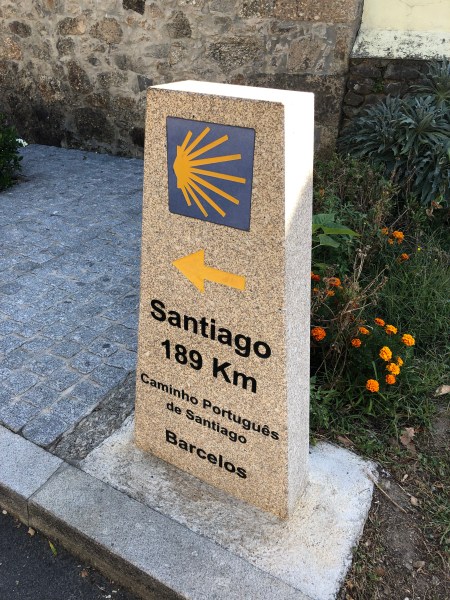
The Way wound through the outskirts of town and into a countryside of rolling hills, stone walls, cornfields, vineyards, and the occasional small village. It was prettier than the previous days, with more narrow dirt lanes mixed in with the ubiquitous cobblestones and the less frequent tarmac.
We made good time, in spite of an unhurried pace. We chatted for a while with a German couple from Reims who walked with us a few kilometres, and who told us the corn we saw growing everywhere was for fuel rather than food. We also talked later with some Americans at a bus shelter on the edge of the village of Tamel. We offered them our sympathy for their president, and they said they hoped he would soon be replaced. We said we hoped so too.
It was a little before one that we checked into our hotel in Balugães, a small, pretty village surrounded by farmland.
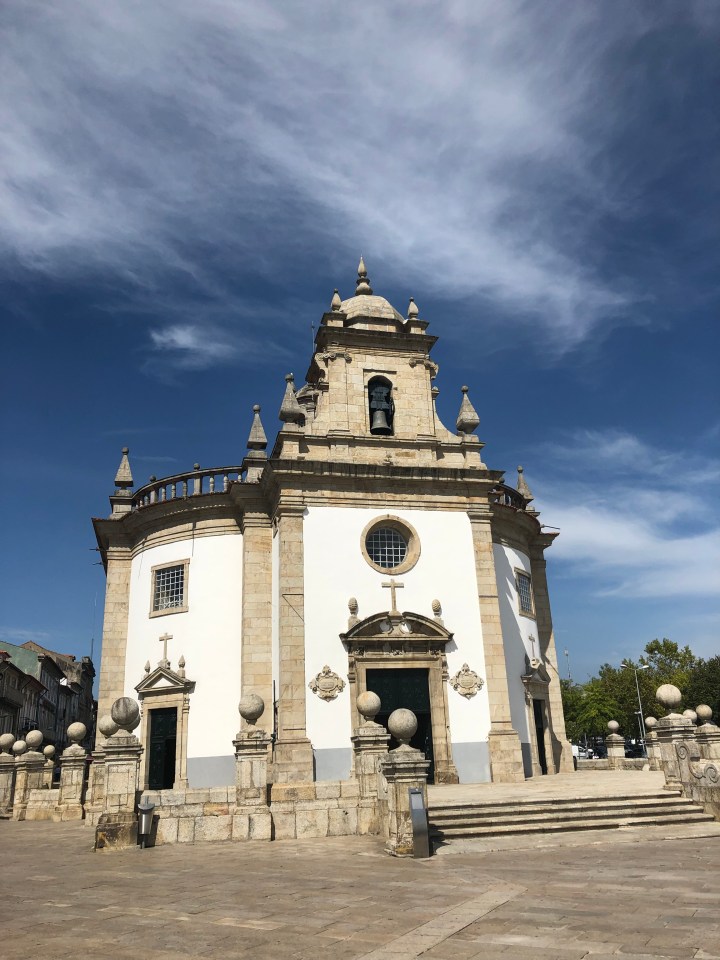
It is 4 p.m. in Barcelos, a pretty town about 10 miles inland from the Portuguese coast. Tourism appears to be the town’s main business, with a lot of modern shops plying their wares in very old buildings. One of the town’s main attractions is an old Romanesque church, built in the 11th century. It is astonishingly beautiful.
We arrived in town a little over an hour ago, shortly before 3 p.m. I was impressed that it seemingly took us less time to walk today’s 20 km than it did yesterday’s 17 km. We began our walk about the slammer time, and if anything, today’s walk was slightly hillier.
Of course, it was also much cooler today, with the temperatures for whole of the morning never breaking 20 Celsius. (I’m guessing, mind you. I don’t have a thermometer with me, and I didn’t see any temperatures displayed anywhere.)
The sun only burned off the cloud cover about an hour before we reached our destination, and even now my weather app says it’s only 22 C, about 8 degrees cooler than Arcos was when we arrived there yesterday.
All of this – the cloudiness, the cooler temperatures and slight dampness to the breeze – along with quieter traffic, by and large, made for a really pleasant walk.
We met more pilgrims on the road, too. A fellow from Ireland, an English couple, the group of Brazilian pilgrims who’ve befriended us along the way, and others, too.
The Brazilians are my favourites so far. So friendly, funny and outgoing. Only one of them, Carol, speaks any English, and neither of us can speak more than a few words of Portuguese, but we all seemed to manage together drinking wine in the courtyard of the hotel last night, and joking around at breakfast this morning. I’ll miss them when we eventually part ways.
The scenery today was even more interesting and impressive than yesterday, as cornfields yielded, here and there, to lush gardens with pear, apple, orange, lemon and lime trees, grape vines, roses, and flowers I can’t begin to name.
The houses, too, were frequently beautiful, especially in the Barcelos suburb of Pereira, where ultramodern casually coexists with medieval ruins, and many houses have small shrines built into their walls and fences.
We lunched in the village of Pedra Furada, named for a large stone with a hole in its centre situated outside an 18th century church. Legend has it that Saint Leocadia was buried alive, and escaped by drilling a hole in her erstwhile tombstone with her head.
Now we are getting ready to go explore Barcelos before dinner, abd then prepare ourselves for tomorrow’s 15 km walk to Balugães.
Flying is something to be endured rather than enjoyed. Even on an ostensibly ‘good’ airline it’s an ordeal. The long indignities of the airport, with its random drug screens and ‘place all your belongings in the tray, yes, your belt, too’; the way you Get squeezed into the ever-shrinking confines of increasingly expensive seats, as they cram ever more passengers into each row; the lousy food (its never a good sign if you have to ask, ‘what is that?’, or when you’re told, ‘all we have left is vegetarian pasta’). If only it were possible to drive to Europe.
But here we are, in Porto. Only 24 hours after arriving at the airport in Vancouver. Of course, some of that time – about eight hours – was spent at the airport in Amsterdam. Luckily, we’d had the idea of booking a hotel room for about six of those hours. ‘Room’ might be generous. If was more of a pod, really. But it was perfect for what we wanted: a place to stretch out, have a quick nap and a shower. If you have a longish layover, I highly recommend it.
It’s hard to say what Porto is like yet, as it’s dark. But it’s quiet, and the few people we’ve met so far have been friendly, and enthusiastic about their city and country.
The hotel here is more than acceptable. I’ll write more tomorrow.
The preparations are done. The BBQ has been cleaned & brought in for storage. The house is closed up. Our bags are packed. We’ve checked in for our flight.
In a few hours, we’ll be in our way. Porto via Amsterdam, then the long walk to Santiago de Compostela. A pilgrim route. And maybe a sort of pilgrimage, too, if not a religious one. A journey of discovery, and of celebration.
I don’t know what I hope to find. Some of it will have to do with places we stop and the people we meet along the way. Some of it will be things we learn about ourselves. Traveling reveals so much about the traveler.
The celebration is less uncertain. It has to do with my continuing life with Adele. We’ve known each other for 28 years, lived together for 27, been married for a little over 25. It amazes me that two people can be together so much and for so long, and still love each other.
It often felt as though we’d never get to this day. There were so many months between the first idea of this journey and this moment. So many things we had to do to prepare. So many tasks that had nothing to do with it, but that we’ve had to do before going: at work, at home. Life seems always to get in its own way.
But here we are, finally, at the starting line: ready and set, and waiting to go.
As I’ve mentioned before, I’m not a religious person. I don’t believe in gods or spirits that are disconnected from bodies, or souls that survive after a person dies. I believe we are physical beings, with an all too finite span of existence, and that what many people call a soul is really just a part of mind or personality. Of course, I could easily be wrong about this, as is the case with any belief, but I haven’t seen any evidence or argument that has convinced me that I’m in error.
And so it may seem strange that I will be making a pilgrimage this year. Not just a journey that has personal meaning, but an actual pilgrimage. Later this year my wife and I will walk one of the several official pilgrim routes to Santiago de Compostela – known at one time as a ‘way of St. James’, as people once believed (and some may still) that the remains of St. James were located in Santiago. Leaving aside the vast amount of historical fraud associated with so-called relics, pilgrimages of this sort have been popular in Europe since the Middle Ages, and many people of more religious bent still embark on such journeys – and the Camino, in particular – for religious or ‘spiritual’ reasons. For me, however, this will be a very long walk through places I have yet to visit, where I hope to meet many people, encounter new foods and wines, new music and art, expand slightly my meagre linguistic capabilities, and learn more about myself.
I have long been of the opinion that walking has benefits that other forms of mobility do not. The physical benefits are obvious and well known – and something I can use more of in my far too sedentary lifestyle. In addition to those, walking (if done right) helps to clear the mind and improve our ability to attend to the world around us, in a manner that other, faster forms of travel preclude. The faster you move, the less you take in, and the less time you have to think about and absorb the information around you. If you really want to know a place, you need to walk it.
Before we travel to the start of our journey, we’ll spend more time walking in our own, more familiar environment. We need to get used to walking more than 10 km – usually 15 to 20 – every day, if we expect to be able to walk the 240 km route we have planned in two weeks. So, over the course of the spring and summer, we’ll begin walking more, building up to the distances we need to able to cover. In doing so, not only will our physical health likely improve (did I mention I spend far too much time sitting?), but I expect we will come to know our home town, and ourselves, in new ways.
If anyone has done a similar journey, please let me know about it in the comments. And if you’ve blogged about it, send me link.
I’ve been home for about 40 hours now, and little by little my body is readjusting to the eight-hour time lag between Ireland and the west coast of Canada. Before my thoughts on my trip recede too much into the distorting waters of memory and forgetting, I thought I’d dash off a few observations in postscript, and post a few more pictures from some of the places I visited.
The bike
Whe I first started planning my trip, I had intended to ship my own motorcycle across to Europe. The more I looked into this, though, the more I realized that it made more sense to hire a bike that was already there. This was mainly about cost-benefit. The relatively short length of my time overseas meant the total cost of renting a brand new bike wasn’t much greater than the cost of shipping my own. When I included the various fees and taxes, insurance costs, and what I would need to do with my bike to get it ready for the trip, it was more or less a wash. My wife pointed out that I was less likely to have expensive and frustrating mechanical issues with a brand new bike than with my ageing warhorse, and since the chances of finding a qualified BMW mechanic in remote areas of the Highlands didn’t seem good, and since the hire bike included roadside assistance in the cost of the rental, I decided she was right (as is often the case).
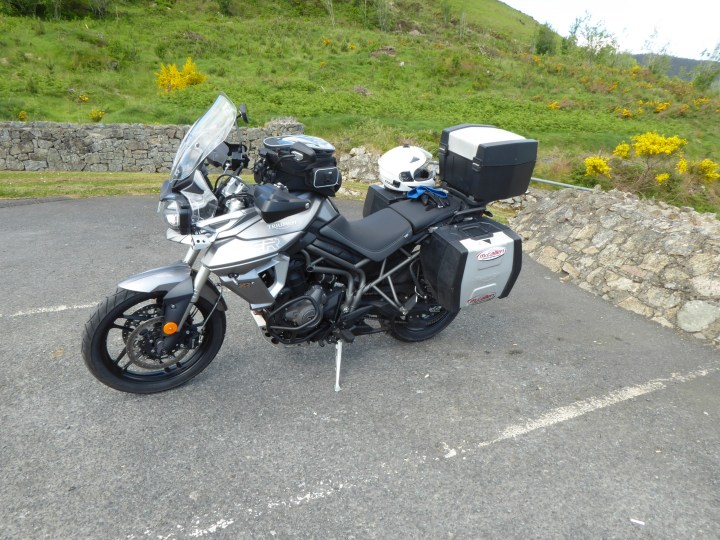
My hire bike: a 2018 Triumph Tiger 800 XRT.
I’m glad I made that choice. The Triumph Tiger 800 is a fantastic bike, and while I don’t like it better than my old R1150GS, certain features definitely came in handy. I’m quite sure that cruise control, for example, helped save me from speeding tickets, especially in Scotland, where speed cameras are ubiquitous. Over time I got used to working with – and more often around – the ridiculous number of controls on the left handlebar, although I’d still suggest Triumph take a look at how this is all arranged. I suspect that something like BMW’s thumb wheel would be easier to use, and help prevent unwanted selections (like inadvertently switching on the heated seats when turning on the fog lamps).
In retrospect, I should have inquired more carefully about luggage capacity. I packed an appropriate amount for the cases I have on my bike, which are admittedly enormous. The aftermarket bags on my GS – Happy Trails side cases (35 and 40 litres), and a Givi top box (52 litres) – can comfortably hold more than enough for a three to four week trip. The much smaller OEM bags on the Triumph are better suited to one week. It’s my own fault for not enquiring. If I ever hire a bike again, I’ll do so.
I would also strongly recommend bringing your own riding gear, or at the very least, your own helmet. The gear I was provided with was mostly high enough quality (I’d even consider buying some RST gear if I could find it here), but it took nearly the full length of the trip for me to remember to put motorcycle pants (or ‘jeans’ as they call them over there, since ‘pants’ means underwear to them) first, then boots. My own gear has nearly full-length side zips, so I can (and usually do) put my boots on first.
The helmet was more of an issue. It fit a little snugger than my helmet, didn’t have a flip up chin bar (which meant I had to remove my glasses every time I wanted to put the helmet on or take it off) or a sun shade (so that I had to decide whether to wear my sunglasses or my regular glasses, something that can’t be changed on the fly). It also didn’t come with internal speakers, so I couldn’t get audio instructions from the GPS and had to look away from the road more often than I would have liked.
The GPS (or sat nav, over there) was an excellent thing to have, and worked well when using Google Maps (or other apps) on my phone wouldn’t have. Even though I had to look at it more than I would have liked, it was much easier to do so quickly than would have been the case on a paper map.
SIM cards
One of the best decisions I made was getting an Irish SIM card, rather than using a ‘travel plan’ from my Canadian provider. The travel plan would have cost me $150, and not even provided me with the meagre amount of data I normally have access to at home. The SIM card (which I got from 3 mobile) gave me “all you can eat” data (60GB!) in Ireland, and 6GB of roaming data for the UK, for €30 (less than a third of the cost of the Canadian travel plan). I ended up using about 17GB total, including 4.5GB in the UK. If you’re a Canadian travelling abroad for any length time, you should seriously consider getting a local SIM card when you arrive. The only downside is how ripped off you’re going to feel you are when you’re at home and paying more than twice the rate for about a tenth of the data you get in Europe.
Ireland
Ireland is one of the most beautiful places I’ve ever been. It’s ridiculous how pretty it is, nearly everywhere.
A typical view in the Irish countryside. This was near the border between Northern Ireland and the Republic.
The Irish people, especially in the Republic, are friendly and welcoming. Dublin is an incredibly cosmopolitan place, with people from all over Europe – and around the world – working and attending university and visiting there. The whole of Ireland is an incredible blend of the new and old. History is on display everywhere, and yet it’s very forward looking as well, especially in cities like Galway and Dublin.
Thoor Ballylee, near Gort in Co. Galway, is the tower that Yeats lived in with his family. Irish literary history is rightly celebrated throughout Ireland.
Ireland has punched well above its weight in literature for more than a century, producing such important writers as Oscar Wilde, W.B. Yeats, James Joyce, Samuel Beckett, Sean O’Casey, Louis MacNeice, and Seamus Heaney, to name just a few.
Musically, too, Ireland has provided the world with more than its fair share of artists, especially in rock and pop music. Thin Lizzy, Gary Moore, The Boomtown Rats, U2, Sinnead O’Connor, The Pogues, Rory Gallagher, and many others have made a huge impact on popular music over the past 50 years.
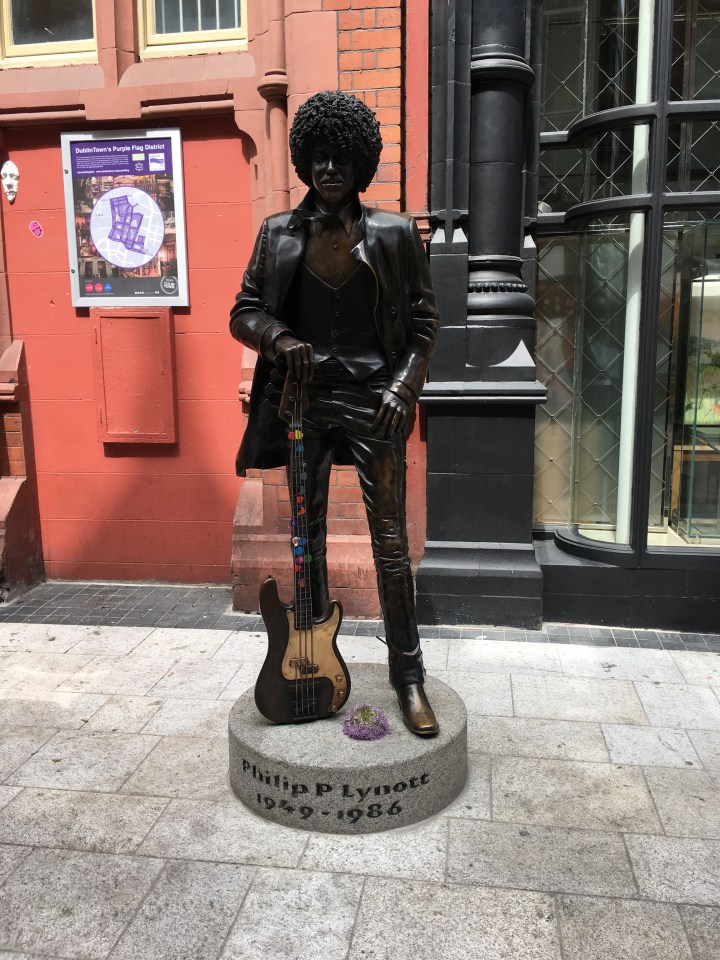
A statue of Phil Lynott, the bassist and lead singer of Thin Lizzy, stands near Grafton Street in the centre of Dublin. In the 1970s, Thin Lizzy paved the way for many other Irish bands, like the Boomtown Rats and U2.
Scotland
Scotland has a different kind of beauty than Ireland. More rugged, less lush, but equally stunning. It’s astonishing just how much the landscape changes as you travel through Scotland. There is as much variation in geology and flora as there is in the many styles of whisky produced there.
The road from Applecross to Shieldaig in the Scottish Highlands.
I would like to have spent more than the week I had in Scotland. It is too vast to really see much of it. What I did see, I loved. From Loch Lomond to Inverness, Moffat to Shieldaig, Elgin to Edinburgh. The beers are different from those in Ireland, and of course single malt whisky is very different from Irish whiskey (which is almost always blended). As was the case in Ireland, many of the road signs, at least in the Highlands, are in both English and Gaelic (although Scots Gaelic isn’t exactly the same as Irish).
In fact, a person could easily spend a week or more just in the Highlands. Or just in Edinburgh. And, I’m sure, the same would go for Glasgow, which I sadly didn’t get to this time around. I hope Adele and I will visit Scotland in the future, so I can see more of it.
A lane in Edinburgh’s Dean Park neighbourhood.
England and Wales
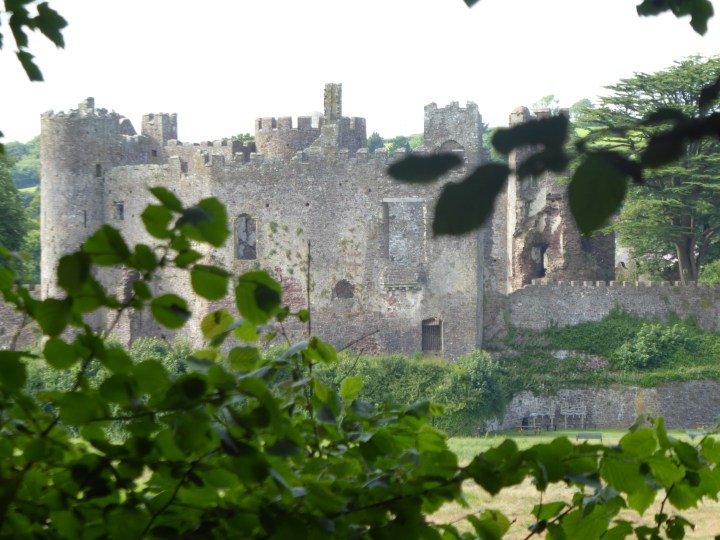
I didn’t spend much time in England or Wales. A couple of nights each. The highlight of that was the time I was in the tiny village of Laugharne, where Dylan Thomas lived and is buried. For such a small place, it packs a lot of beauty and history into it. It would be worth a second visit, if I’m ever down that way again.
The ruins of the castle at Laugharne, on the south coast of Wales.
Midlife non-crisis
All in all, it was a fantastic journey, and an excellent, adventurous way to celebrate being 50. If I were doing it again, I’m not sure what I’d change. Add more time, maybe, if I could, and have Adele accompany me for at least part of it. Traveling alone for that length of time was a very different experience for me. I’m glad I did it, but I think I prefer having someone to share the experience with.
I don’t really have a lot more to say. I do, though, have many more pictures. Here is a sampling from them.
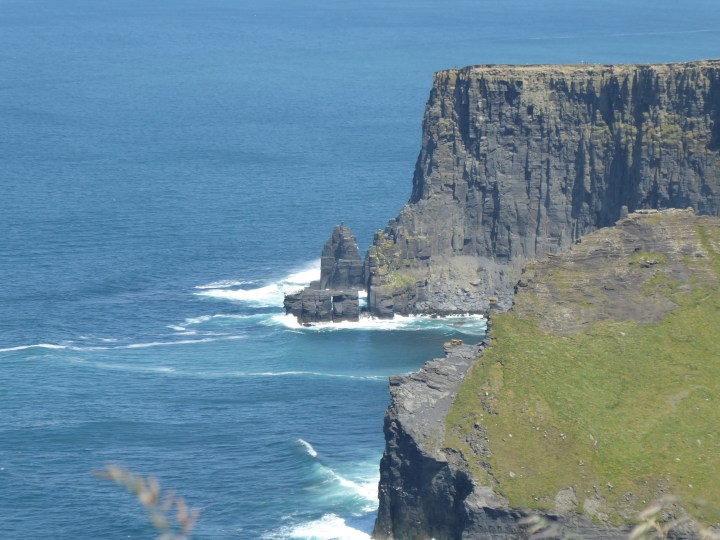
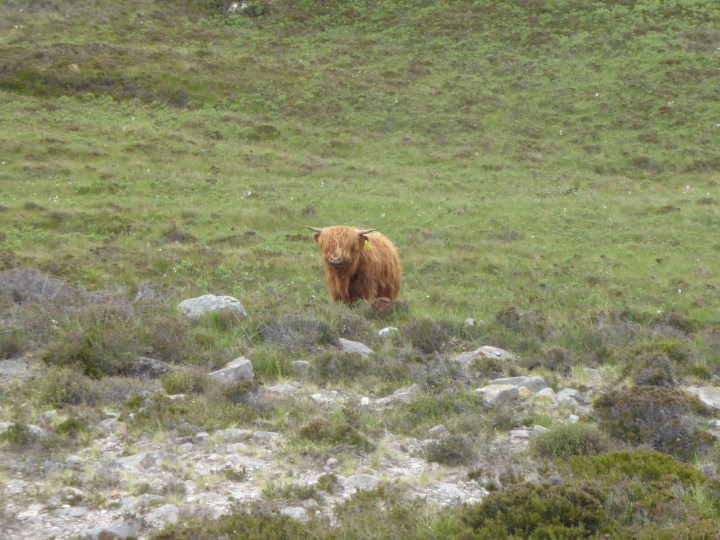
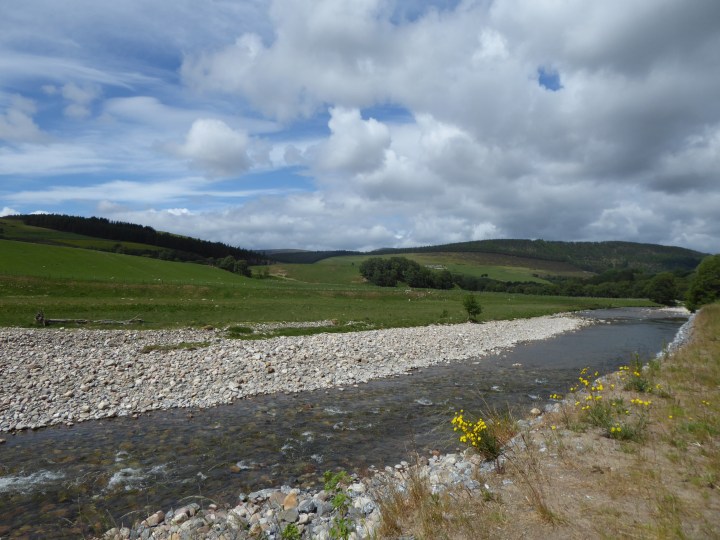
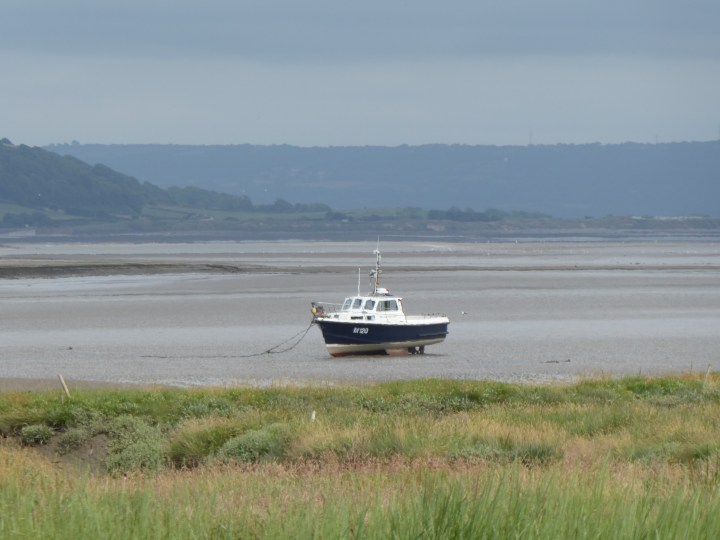
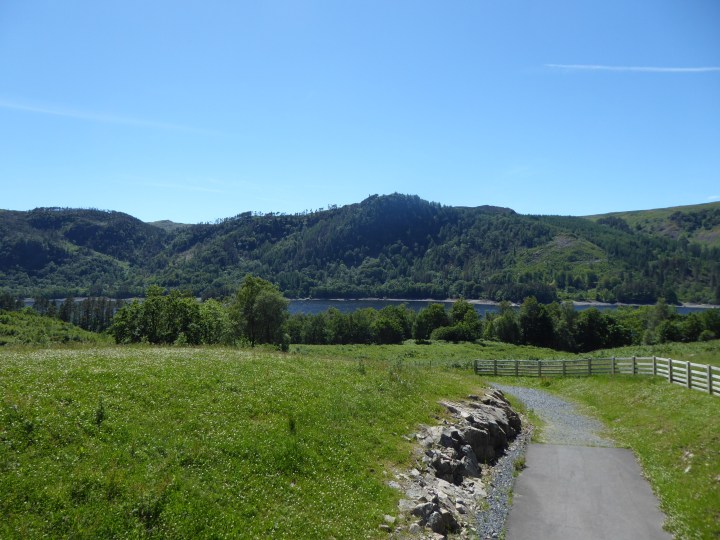
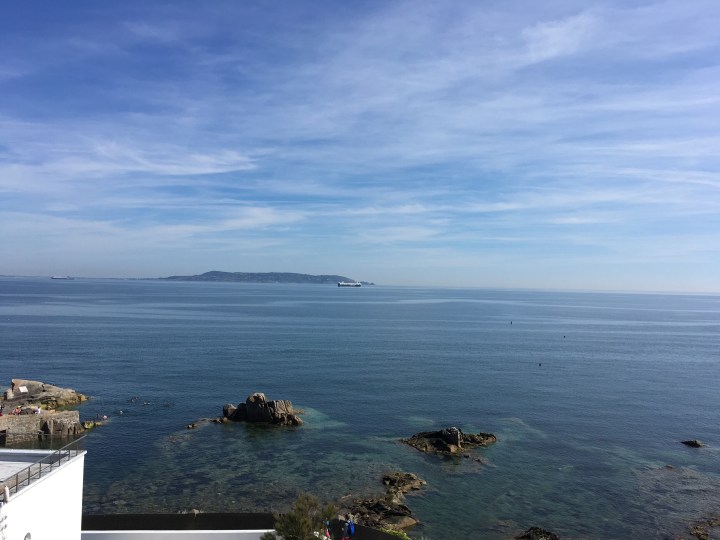
Farms in the Dingle peninsula.Cliffs of MoherConnemaraGiant’s Causeway, Northern IrelandGiant’s Causeway, Northern IrelandThe road to Applecross, or Bealach na Ba, Scottish HighlandsHighland cattleSculpture near the National Gallery in EdinburghWashback stills (the tall ones) and spirit stills at the Glenfiddich distillery in Dufftown, ScotlandCairngorms National Park, ScotlandScarborough Castle, Scarborough, EnglandWaiting for the tide to come in. Laugharne, Wales.Lake District, England.Sandycove, Dublin, Ireland.
One last day. Tomorrow morning I’ll board the plane for home, but I had a couple of things to do first.
After breakfast I took a DART train out to Sandycove, where the tower that figures at the start of Ulysses still stands. There’s now a James Joyce museum there, run by volunteers, and free to the public to visit, although I was the only one there. It’s pretty interesting if you like Joyce, which I do.
I had originally planned to visit Clontarf Castle, but I learned that the current iteration is only about 200 years old, and is now home to a hotel. It bears little, if any, resemblance to the original Twelfth century version, which at any rate was built more than a hundred years after the famous battles with Viking invaders took place. So I decided to to skip it. The Joyce museum was a more than adequate substitute.
Sandycove itself is a nice neighbourhood, reminiscent of Kitsilano in Vancouver, but a little more reserved. The beaches are beautiful, but were sparsely populated in spite of the unusually warm weather.
The view from the top of the tower. I imagined I could make out a plume of smoke from a mail boat.
I left Sandycove and made my way back to Grafton Street, where I had a quick lunch, and then on to St. James’s Gate to tour the Guinness Storehouse. It’s interesting how similar the processes are for making beer & whisky – up to a point. Beer makers put hops into the wort, for example, and they don’t distill their product.
At any rate, i (and several hundred others today) learned the secret to pouring a perfect pint, and I picked up some souvenirs and gifts in the gift shop. I can’t imagine a similar tour involving a Canadian brewer. Who would want to learn how your a Molson or Labbatt’s beer just so?
My perfect pour, if I do say so.
Now I’m back at the hotel, and thinking about where to wander for dinner. No place too far, I think. I’ve walked nearly 17 km today already, and I’m burnt out on tourist stuff. Then I’ll come back here, and maybe have a pint or two in the pub downstairs before saying goodnight to Dublin for the last time.
This holiday has been a blast. Thanks to everyone who’s been following along. I’ll be back in a couple of days.
It never rains in Dublin. That’s been my experience, anyway. It’s almost always sunny and warm, and as such I’ve sought refuge from big hard sun in Grogan’s pub. I am seated at the bar, with a pint of Smithwick’s red, listening to the publican talk about the World Cup, and other tourists ordering drinks, while the regulars sit quietly off to the side.
I think yesterday I had understated just how much I prefer Dublin to Belfast. The city exudes confidence and hospitality, whereas its northern cousin seems anxious and almost hostile to those who don’t belong. At any rate, that is neither here nor there now. Here is Dublin, and now is a sunny Sunday afternoon.
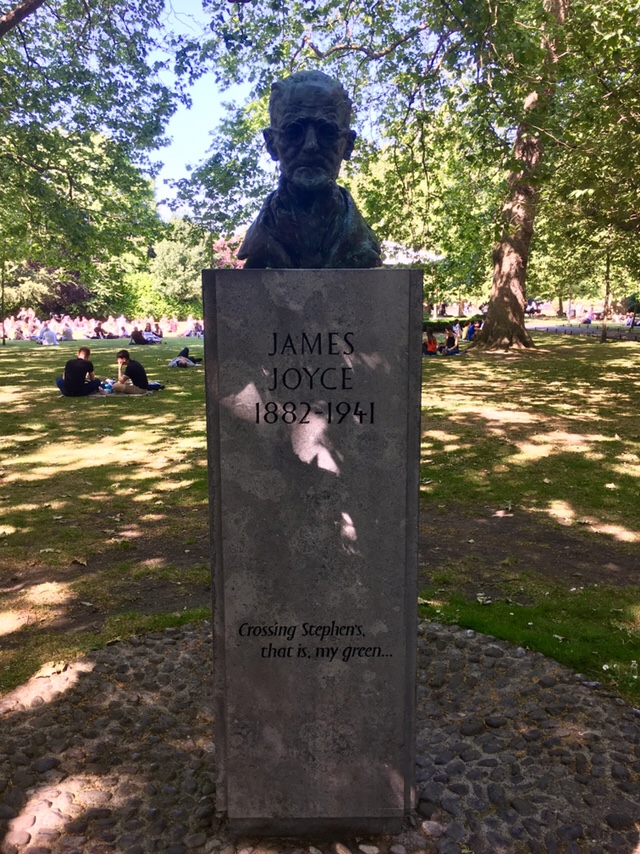
Since arriving – I’m going to skip over this morning – I’ve had an excellent sandwich, coffee and cannoli at a great little Italian bakery about 10 minutes walk from my hotel; I’ve walked around Trinity University, and peaked at the Book of Kells through the heads and shoulders of German, American and Chinese tour groups, and strolled around St. Stephen’s Green (appropriately on my brother Stephen’s birthday). I am having a relaxing penultimate night in Ireland.
Tomorrow I plan to tour the Jameson distillery and visit Clontarf Castle (where the High King Brian Boru fought the Vikings, or something). I’m not sure what else. I’m sure a pub or two will be involved. An early night, aince I have a morning flight on Tuesday.
Home is very much on my mind. I’ll save reflecting back the past few weeks till I’m back.
I don’t know if Belfast has an inferiority complex about Dublin, but it probably should. From what I have seen of the city, it lacks it’s southern neighbour’s charm, confidence and vibrancy. In fairness, I’m sure I have not seen the city’s best.
I am just back from dinner, in a restaurant housed in the basement of an old prison, or ‘gaol’, which is now a sort of museum. I thought a couple of the other buildings nearby were jails, but it turned out they were all part of a hospital. It seems strange to see a hospital with all that fencing and security around it. But that is part of my spoiled North American privilege, probably. Car bombs have never really been a thing in Canada. They haven’t been here for a long time, either, but you wouldn’t know it looking around. The police still drive around in armoured cars, and prominent buildings (i.e., churches) have crash guards in front of them. It’s been 20 years since the Good Friday Agreement was signed, but the place feels on tenterhooks.
It was fitting that I had dinner in a disused jail, since my room at the most regrettable B&B I’ve encountered is about the size of a cell. I’d be surprised if it were much more than 2 m wide. I can stand beside the single bed (occupies the length of the room on the wall with the window), and stretch my arms to either side, and nearly touch both walls at once.
Worse, when I arrived, there was no one to greet me or check me in. The proprietor was ‘in town’ shopping with her gran. She’d be back when she could. She had sent an email with the front door code, and told me where I could find the key for my room. Only it wasn’t there. I called to say there was no key, and she said it must be in the door to the room, no worries. I checked, and it wasn’t. She said she’d be by within the hour. She wasn’t.
I spent about an hour working to get the blinds shut. I finally did, and used my things to block the door, so I could have a shower. Eventually she arrived, young, blonde, and I think Australian, and tried every key should could find to no avail. At last she said, ‘I’m going to give you the skeleton key. Please don’t rob us.’ What would I steal? Some people shouldn’t try to run a business.
If it weren’t all but impossible to find another place on a Saturday night, I would have done so.
But before all this, I had risen early back in Moffat, and packed my things on the bike, and had breakfast before taking off on the two hour ride to Cairnryan to catch the ferry. I had to arrive no later than 11 for the 11:30 sailing. Luckily, I made good time.
The ferry ride was pleasant an uneventful. When we docked, I made my way down to Lisburn, got briefly lost trying to find the bike shop again. (The GPS really doesn’t like Lisburn, and who can blame it, really?) I brought the bike back. They had a quick look, decided everything was in order, and drove me to the train station once I’d transferred everything over from the panniers to my duffle bag. (Note to self: in the future, either bring a suitcase with wheels or a backpack.) I caught an express train to Belfast, and grabbed a cab to the B&B, where I now sit. And wait. Wait for morning and the return to Dublin.
Dublin will be more relaxed (I hope and expect), and I’ll have part of Sunday and a full day on Monday to explore at my leisure. And then it will be time to return home.
One of the great things about traveling is how it makes you more appreciative of what you’ve left behind, what you get to return to. I’m looking forward to being with Adele again, to having her presence bring so much warmth and meaning to my days. I’m looking forward to being in our place. To cooking for us. To our everyday lives. And to the next time we step out of those lives for a short time. Next time, together.
I’ve been riding around Britain and Ireland for the past nearly three weeks, and for the first time today, I encountered an asshat. Not once, but twice he rode up behind me and lurked, and then when I decided to overtake the car in front of me, passed me in the same lane as me. Anyway, I came to no harm, because one of us knows how to drive. And that one of us muttered a string of expletives inside my helmet and then did my best to let it go.
I think that was just before I reached Chester, so I’d probably left Wales. It’s funny. When you enter Scotland or Wales, they put up signs. The English, well, they think the whole thing is theirs, so why bother.
It was still fairly cool when I set out this morning. My weather app said 11 C, and predicted only a few degrees better in Scotland, so I dressed appropriately. The thermometer on the motorcycle told me it was 14.5 C when I set off, and I worried I’d dressed too warmly, but once on the highway, going 70 mph, I was fine. At least for the first while. Eventually, I stopped to get coffee and delayer, as the bike’s display screen told me it was 19 C, and not even noon.
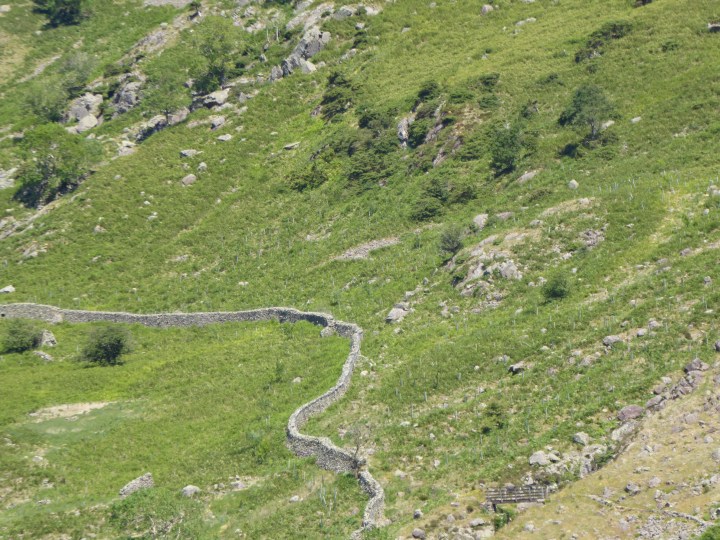
It was mostly M road again today. In these last days, there’s more of a sense of urgency about getting to places. Still, when I got to the turnoff for the Lake District, I took it, and I’m glad I did. While the towns (especially Windermere, the former home of Beatrix Potter) are chock-a-block with tourists, there are long stretches of winding mountain road with relatively few other vehicles on them. They were a very welcome diversion. Sadly there were very few places to stop along the way where a decent picture could be taken, although I did get a couple.
Stone walls meander along the mountainside like rivers of rock
All good things come to an end, though, and soon I was back on the M6 heading north. On the plus side, I was heading back to Scotland for the night, before taking the ferry back to Belfast and returning the bike tomorrow. And while I was riding up the M6, with signs starting to announce that SCOTLAND (their emphasis) lay ahead, I looked up and – no word of a lie – two long, thin streams of high cloud were crossed in the mostly clear blue sky, making it look like a Scottish flag.
And so now I am in Moffat. Because I have two friends named Moffat, and Valerie told me I had to come here, and I had to bring her some Moffat Toffee. (I have no idea what’s special about it, other than it shares her name. Maybe that’s it. What more do you need? If there was a Milner whisky, I’d probably buy it.)
Moffat is a small place. Not really much more than a village. It has more than its share of B&Bs and Guesthouses, one of which I’m staying in, as well as a Best Western hotel, it’s own police station, a “general surgery”, and of course a shop that sells nothing but toffee. There are other things, too. A church whose tower dwarfs every other building in town, a handful of pubs, a couple of gas stations, grocery stores, etc. It’s a nice enough place to spend the night.
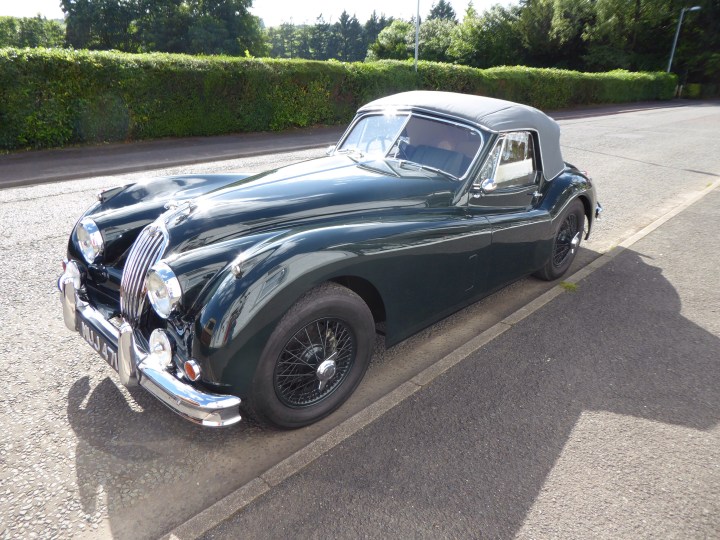
They’re having a classic car show here this weekend. I’ve seen Rovers, MGs, Jags, Singers, sadly not a Morgan. The pubs and restaurants are full of the English. The pub I ate dinner in was full of Manchunians watching football, shooting pool, playing the jukebox too loud.
One of the prettiest Jags I’ve ever seen.
Now I’m back at the B&B. To say the WiFi is dodgy is an understatement. I’ve had a lot of dodgy connections on this trip. Half the time here, though, I cant find it at all, no matter where I stand in my room. Luckily I have lots of unused data on my Irish SIM card.
Tomorrow I’ll say goodbye to Scotland for the last time on this trip. I’ll have a last few days in Ireland, and then I’ll fly home. I’ll be bringing a lot of good memories home with me. Oh, and some toffee, of course.


















 The Premeditations of Markus O'Reallyus