The Way – part 7: grinding in northern Portugal – Ponte de Lima to Cossourado

I’m drunk. Since arrived at our hotel, I’ve had about a bottle and a half of vinho verde. Yes, I’m a lightweight. I’m old. -ish. Get lost.

Today was a hard day. The guide book said it would be, although it softened it by saying this would be “the most challenging day” of the Caminho. Christ, I hope so!
If you’re at all familiar with Vancouver, you’ll understand when I say it was like plunking half the Grouse Grind into a half marathon route. We gained 405 m – 1330 feet, for those of you who still think in such terms – during our ‘walk’ today. Most of it concentrated in a relatively short distance.

But we made it, somehow, and were even the first to arrive at our hotel. More drinking time for us! Winning!

For quite a while this morning, I wondered if they’d oversold the ‘challenging’ aspect of this stage. The we reached the grind – or what I’m now referring to as the ‘Portuguese Pummel’.

Thankfully we had purchased (and remembered to pack) trekking poles – although one of Adele’s crapped out, so we each used one. (Fair’s fair, right?) These proved invaluable in getting us up the rock-strewn gullies that appeared about 12 km into our 22 km hike.

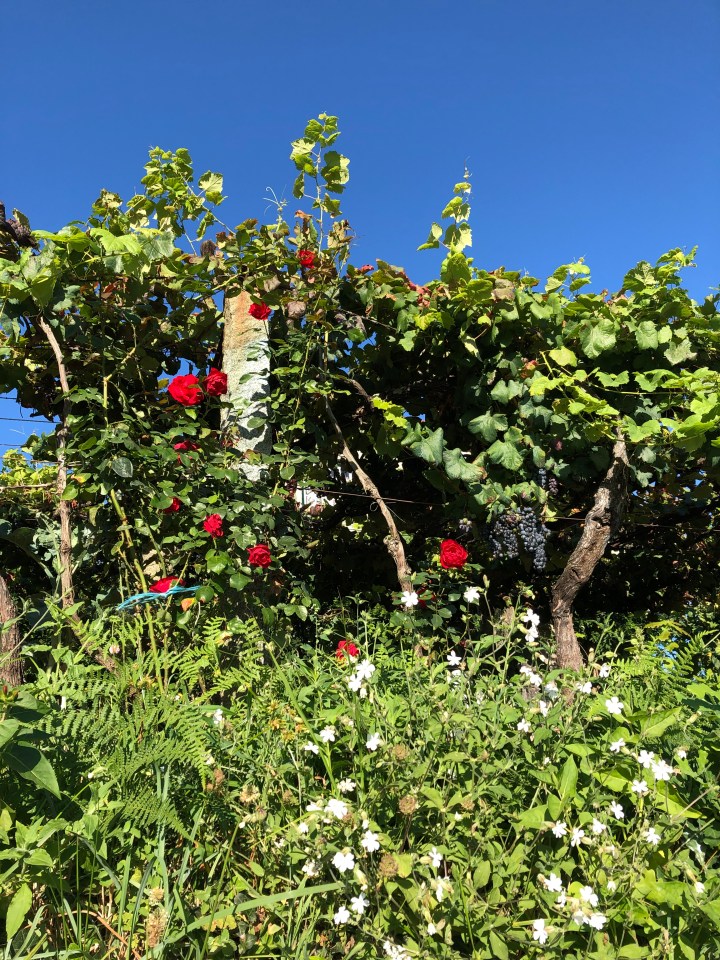
It wouldn’t have been nearly so bad, though, if not for how hot it was. The temperatures reached the upper 20s C by 11 a.m., and by the time we reached the peak of our climb we’d hit 30 C, maybe more. The view, though, was spectacular.

Even after that zenith, though, today’s walk was a slog. The last time I drank this much water in a day (not counting the wine) was when I quit smoking, a little over 20 years ago.

We eventually arrived at our hotel, the exquisite Casa da Capela, at around 4 p.m., having left Ponte de Lima around 8:15 a.m.

It was a gruelling day, but I feel amply rewarded by the hotel, the food they served us for dinner, and – of course – the wine. (Oh, they also have a pool, not heated, which was great for soaking our feet in.)
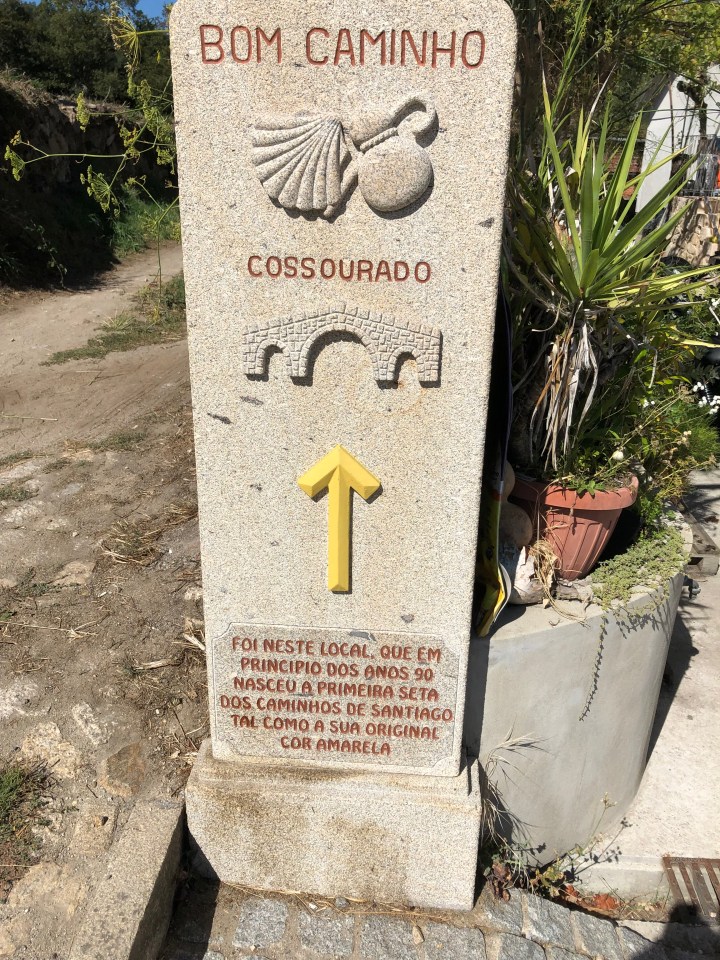
Tomorrow, thankfully, will be a shorter walk, and mostly downhill.

Literacy, culture and tartar sauce

A news story today says a strata in Vancouver’s tony Coal Harbour neighbourhood has vetoed the lease of a commercial space in their building in part because the name of the restaurant that was set to open there contained an ‘offensive’ word. Moby Dick Fish & Chips has operated in Whiterock, about a half hour south of Vancouver, for several years, apparently without anyone thinking they were serving whale rather than fish, or finding the name offensive. Equally apparent is that the strata corporation and its lawyers have neither read nor heard of Herman Melville’s classic novel, from which the fish & chip shop has inexplicably taken its name. (It’s doubtful the owners of the shop have read it either, for that matter. It’s not a cheerful book.)

Now, you don’t have to like Moby Dick, or Melville for that matter, to know something about the story. Or at least, so I thought. In fact, I didn’t think you even needed to be particularly well-read (or well-educated). The tale of Captain Ahab’s obsessive quest for the great white whale had, I thought, become woven into common cultural fabric of North America, if not the entire English-speaking world. And perhaps it has.

There has been a raging debate in Vancouver over the past several years about the extent to which foreign buyers have affected the local real estate market. Coal Harbour has often been held up as an example – in particular the proportion of expensive condos whose owners seem rarely to be at home. I don’t want to get into that debate here. I think the about-face of the real estate association in the aftermath of the likely misguided ‘Foreign Buyers Tax’ introduced hurriedly last summer has more or less settled that matter. The interesting thing to me is that nearly half of the lower mainland’s residents (or at least of its home owners) come from different cultural backgrounds now, such that we can no longer assume common cultural currency.

This is not a one-way street, and I am not bemoaning the presence or influence of immigrants, like some loopy Trumper or Brexiter. (Or some people running to lead the Conservative Party of Canada – but let’s leave that aside for now.) Just as I cannot assume that everyone I speak to (or who reads this blog) will understand references to Moby Dick – or Hamlet, or Huckleberry Finn, or Beatles songs, or Star Wars – neither can others expect me to understand their cultural markers. What do I know about Chinese literature, South American film stars, K-pop, or even Sikhism?

Being honest, North Americans – by which, since we’re being honest, means those of us of European decent – have not even made an attempt to understand the rich and diverse cultures of the peoples we stole the land from in the first place, whose descendants still live here. We’ve made little to no attempt to understand the ‘minority’ cultures in our midst, and who we generally ignore until they begin to ignore us back, rather than trying to fit in, which we find especially galling if some of them are really rich.

My advice to the restaurant owner is: change your name. Anyone who has read the book will find it puzzzling at best anyway, and it apparently offends those who know some of the language but none of the literature of English-speaking North America. Oh, and maybe avoid literary references altogether. The Old Man and the Sea? Great book, depressing as hell. Spoiler alert – he loses the fish.