We’ve checked in at our hotel, the beautiful and aptly named Asia Hotel, in Hué. Getting here was an adventure.
After our brief moment in Ha Long Bay, we boarded the bus back to Hanoi. We’d already checked out the previous morning, but they kept our suitcases for us, and greeted us with air conditioning and smiles. After literally chilling in the lobby for an hour or so, we went in search of a) an ATM, b) banh mi, C) a Circle K (or whatever) to get more cold water for the train ride to Hué. (It actually ended up being a 7-11, but I wanted to keep the ABC going.)
After a couple of false starts (no ATM where Maps said there would be one), we found an HSBC machine to withdraw some cash. It’s amazing how quickly you can burn through it. After that, we found an air-conditioned banh mi shop called Bami Ói. We’d eaten so much on the boat earlier in the day, we really didn’t need more than that. (In fact, Adele opted just for a mango, banana, & apple smoothie, rather than eating even a small dinner.) Then we popped into a 7-11 on our way back to the hotel, to meet up with the rest of our tour mates.
The bus to take us to the train station was supposed to arrive at 6:30, but at the last moment they notified Yang that it had broken down, and they would be sending mini-vans instead. They arrived several minutes apart, which meant we didn’t actually board the train until just a few minutes before it was scheduled to leave. But hey, at least we made it.
The trains in Vietnam are quite old, and the tracks are even older, having been laid down initially by the French, during their colonial rule. The bunks are utilitarian at best: solid platforms with inadequate foam mattresses, barely 4 inches thick and with absolutely no give. We were 4 to a room, sharing our berth with Yang and another G Adventures CEO from another tour on the same train.
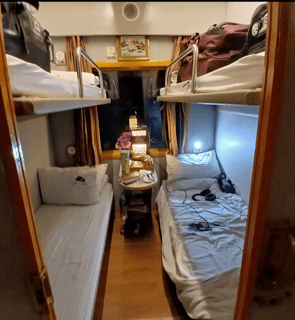
The train pitched and jerked and bounced along the decades-old tracks, and sleep was nearly impossible. Just short snatches from which we were jolted awake, if not by the movement of the train itself then by the shrill announcements of pending stops along the way.
When we finally arrived in Hué a small motor coach shuttled us to our hotel. It was too early to check in, but we unloaded our luggage and went upstairs for breakfast. The buffet was worth one of the 180K dong it cost each of us — and then some. Strong coffee, passion fruit or watermelon juice, eggs, bacon, spring rolls, congee, an omelette and crepe station, fresh fruit, salads, pastries, baguettes, and more.

After breakfast we piled back onto the motor coach for a tour of some key historic sites: the Imperial Citadel, the Thien Mu pagoda, and a visit to a royal tomb.
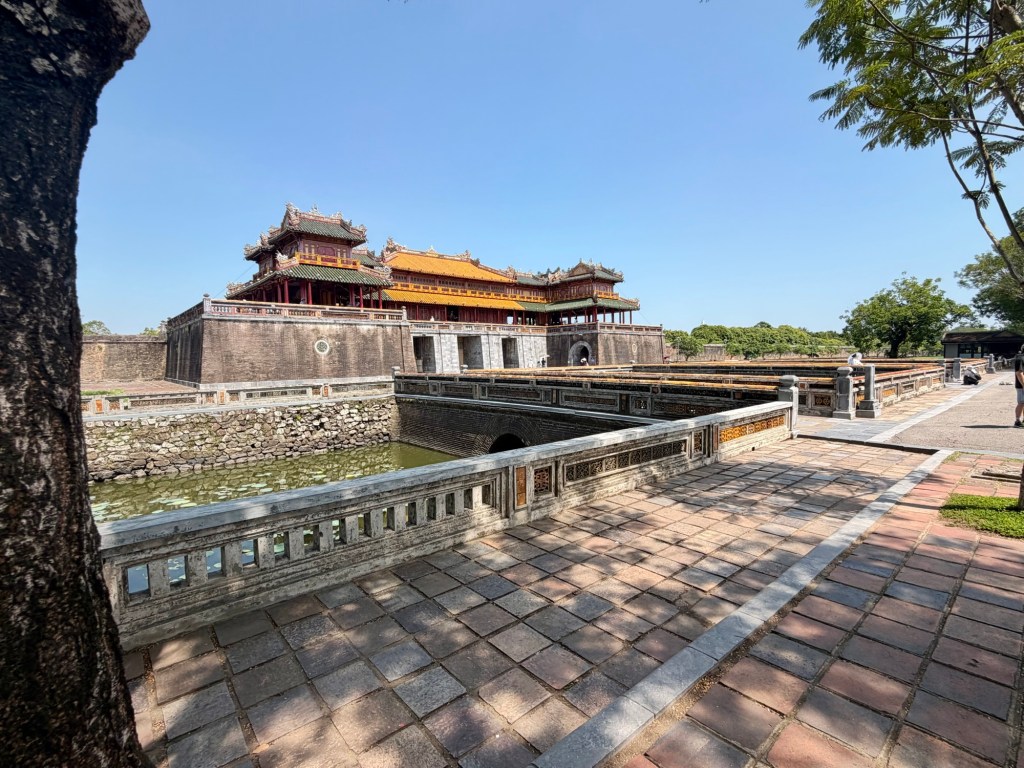
The citadel was first built during the Nguyen Dynasty, the last of the Vietnamese royal dynasties, after they relocated the capital from Hanoi to Hué. The 13 kings of that dynasty (a lucky number, if ever there was one) lived here. it comprises an outer wall surrounded y a moat, within which is another walled compound, also surrounded by a moat, and within that, the forbidden city. The second area consists of a series of five palaces, many of which have been destroyed at one time or another. Only the first palace and the fifth are currently intact and open to the public.
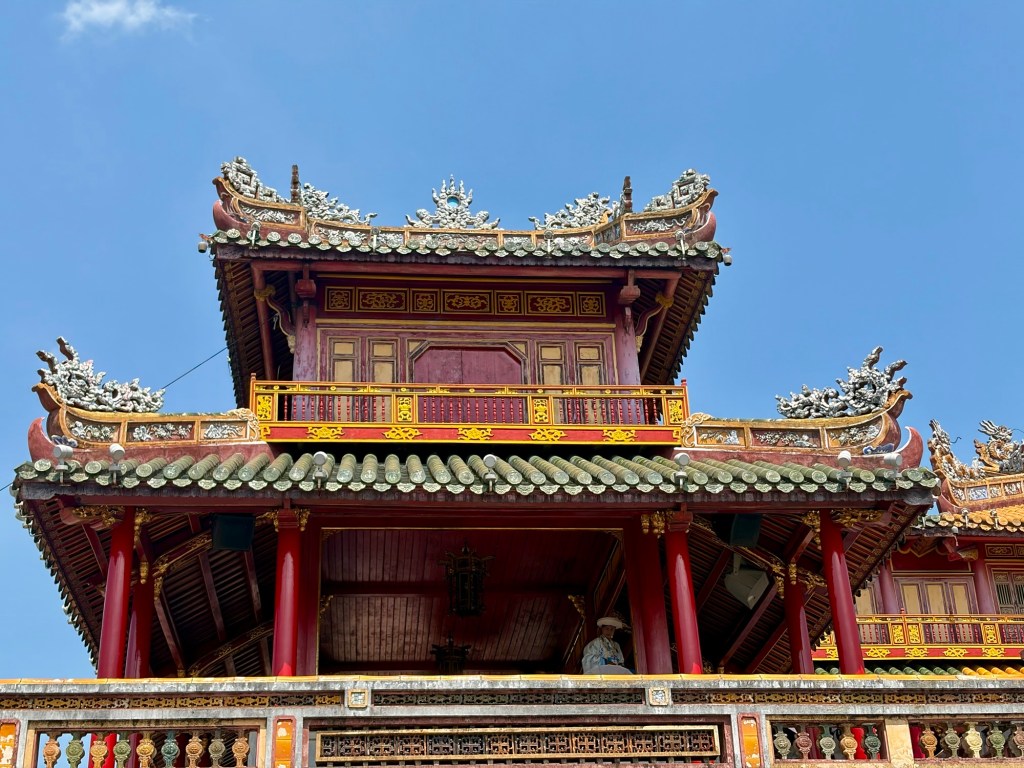
The first and second palaces were mainly meeting places, with the second used for regular government business and the first being mainly used for such things as coronations.
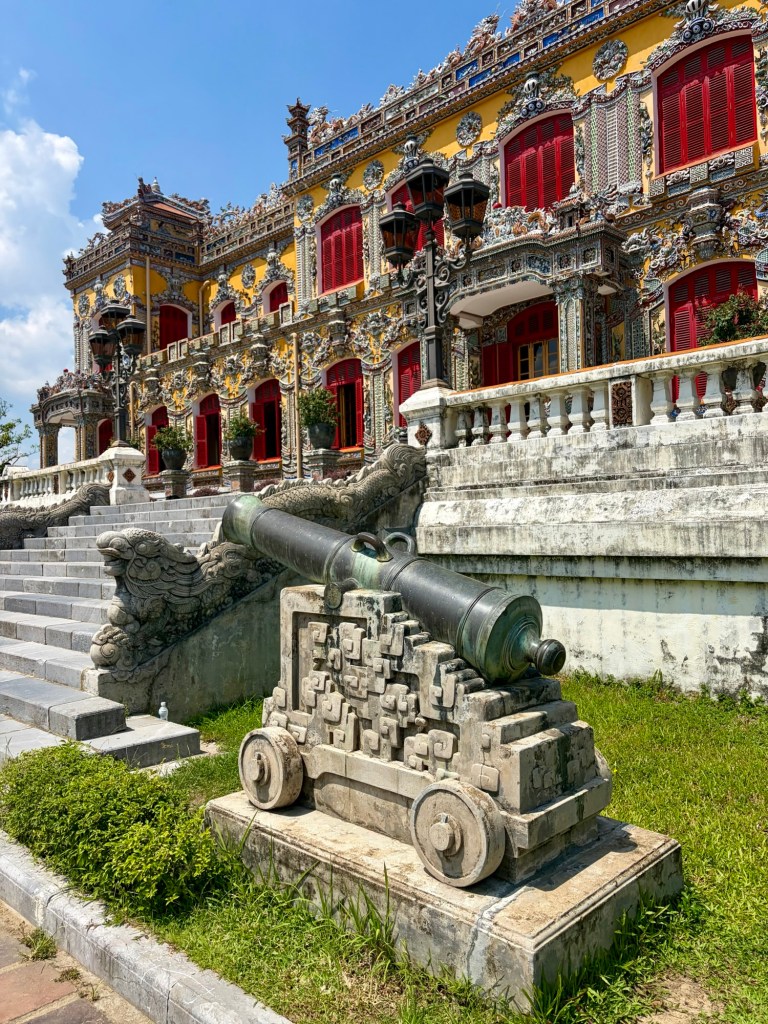
The king, we were told, had one wife, but often dozens of concubines, who would compete for his favour (and to bear him children). One king had 142 children, which seems excessive to me. No wonder he only lived to be 51!
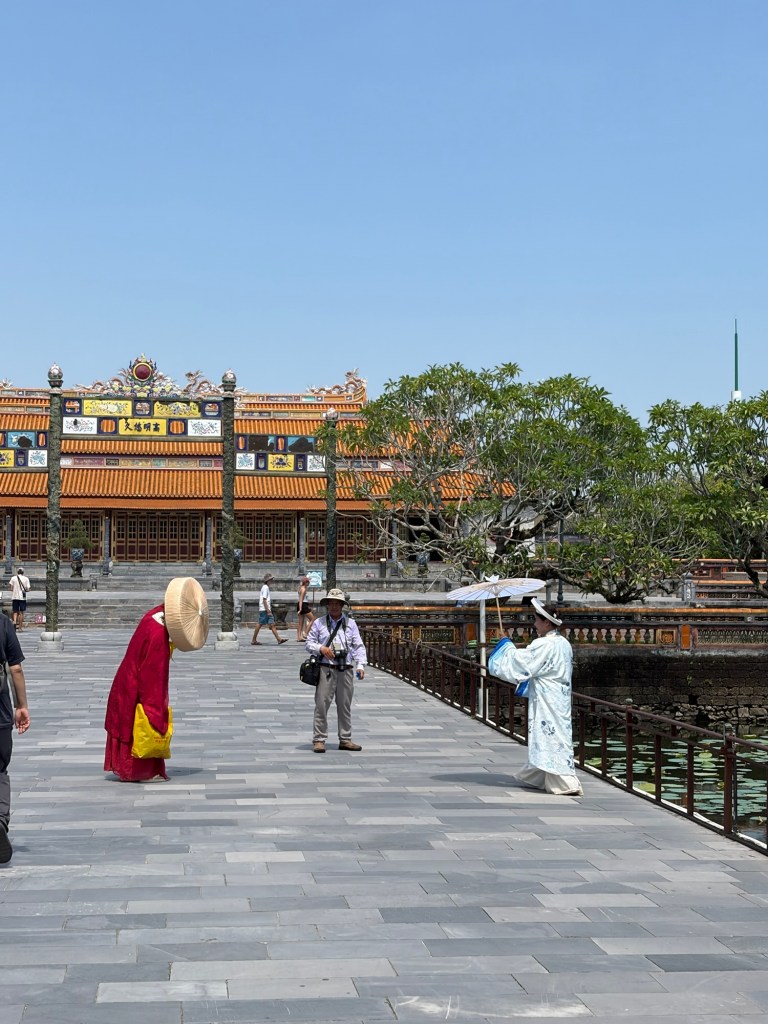
The citadel grounds were filled with young people (mostly young women) dressed in hot traditional costumes of concubines, posing for photos to post on their Instagram. Have I mentioned before that it’s very warm here? Roughly 20 degrees (Celsius, I don’t have a clue what that means in Fahrenheit) warmer than back home. That seems like a lot to put yourself through just for some likes.
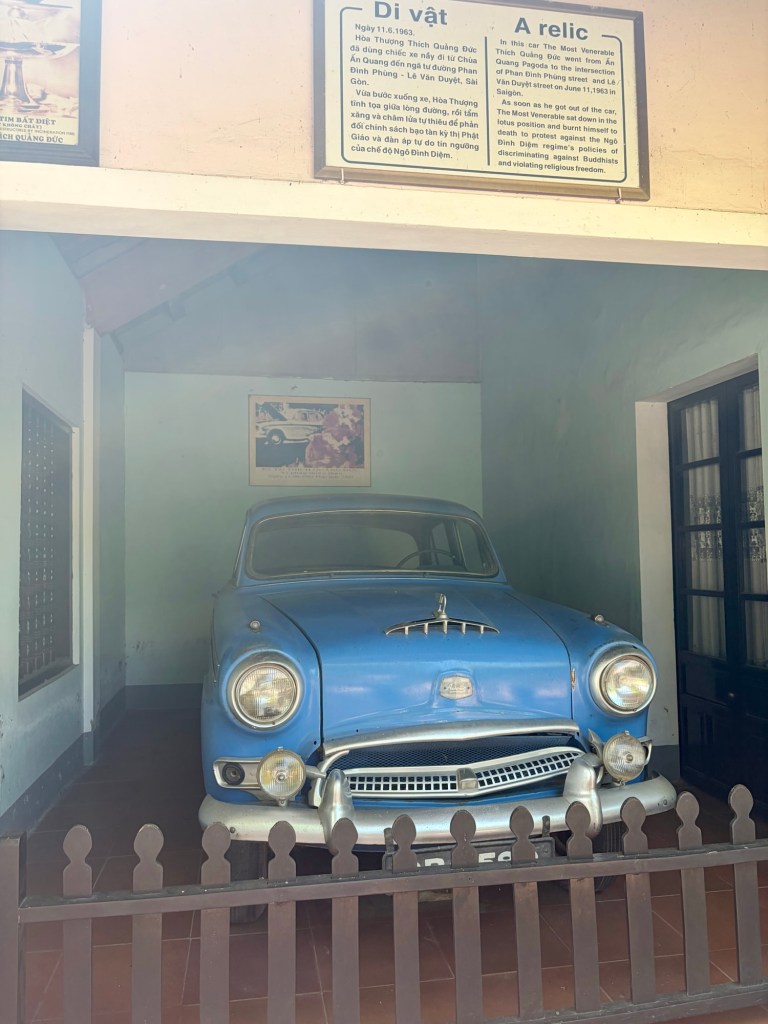
Our next stop was the Thien Mu Temple. (Every time our guide said the name it sounded like he said Temu Pagoda, but I was sure that couldn’t be right, so I’m glad I looked it up.) This was the home of Thich Quang Duc, who famously immolated himself in Saigon as a protest for religious freedom. The photograph of his self-sacrifice became one of the most impactful of the American-Vietnam War. His blue Austin A95 Westminster is kept there as a kind of relic. About 70 monks still live there.
The last stop on the tour was one of the royal tombs along the Perfume River. The pavilion surrounding the actual burial site is undergoing renovation, but we were able to visit the building where the king’s wife, concubines, children and descendants come to pay him respect.
Once the tour was done we came back to the hotel where our room was waiting for us. Now, showered and relaxed, I am going to take a short nap before we go for dinner. More later.

