
Today was hard. We set off early to visit S-21, the infamous Khmer Rouge prison, and then to the genocide museum at Choeung Ek, a former Chinese graveyard, better known to many as the Killing Fields.
The Khmer Rouge only held power in Cambodia for a short time, from 1975 until they were displaced by the Vietnamese in 1979. Their stated goal was to create a classless, agrarian society, not dependent on money, commerce or trade. They were led by the infamous dictator Pol Pot.
When the Khmer Rouge entered Phnom Penh, they were initially greeted with celebration. That changed very quickly, though. They ordered the city to be emptied over a span of three days. People were forced to wear all black clothing, and to leave all their belongings behind. Regardless of what they had done before, they would now work as labourers on collectivist farms. Families were separated, with boys, girls, women and men all living and working in groups divided along lines of age and gender.
Intellectuals, doctors, lawyers, engineers, teachers, politicians , policemen, soldiers and officials connected to the old regime were taken to S-21, a former school now transformed into a prison, and a place of torture. They were made to confess their alleged crimes against the revolution, and to make lists of their families: wives, children, parents, siblings, who would in turn be rounded up, too. When their confessions and lists were completed, they were executed.
Getting people to confess often required torture. I will spare you the list of sadistic methods and tools. It is enough to know that no one was spared: not infants or children; not mothers, or soon-to-be mothers; not the elderly.
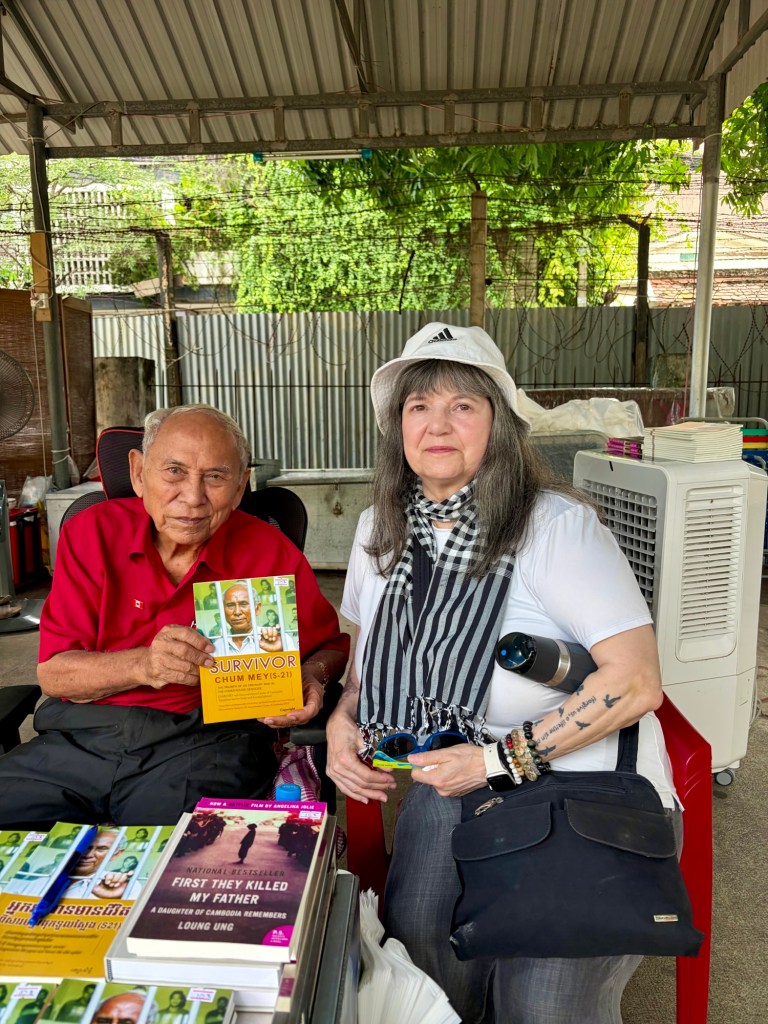
Eventually, there were too many bodies to keep burying them outside the prison walls, and so the Khmer Rouge appropriated an old Chinese graveyard outside Phnom Penh, called Choeung Ek.Prisoners were transported from S-21, blindfolded and with their hands bound behind their backs, on trucks to the killing fields, where they were slaughtered and buried in mass graves. At first, 20-30 a day, but later more than 300 a day. Nearly 9,000 skulls have been exhumed since 1979, when all this was uncovered by the Vietnamese.
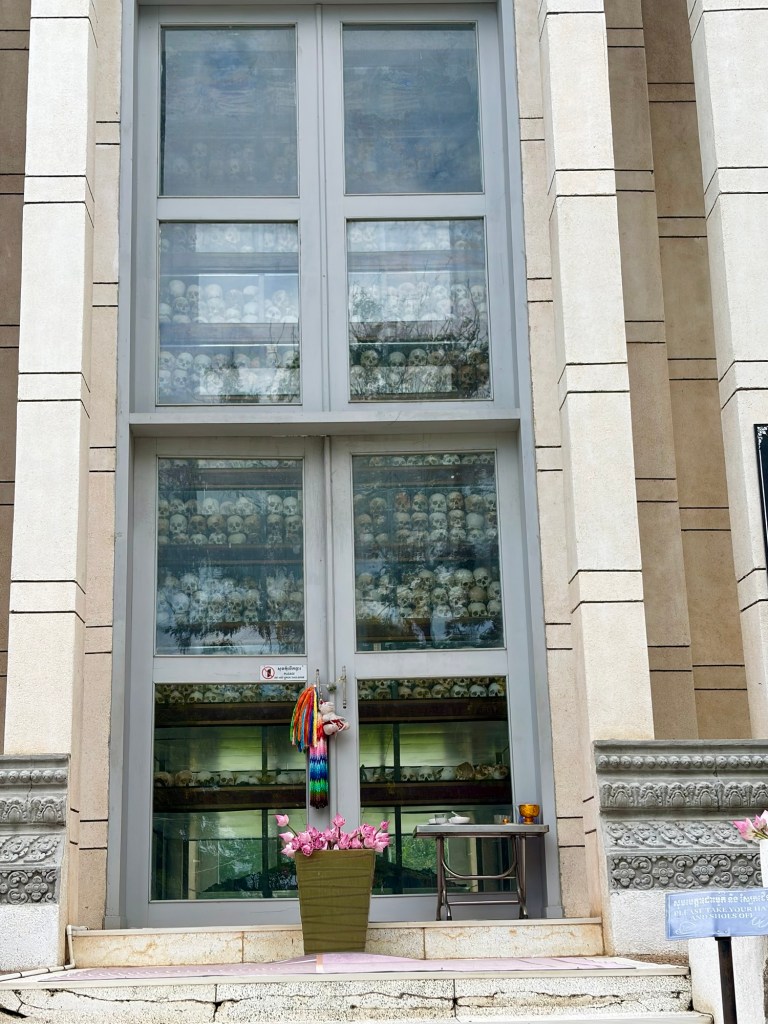
I will not detail the methods of execution. Suffice it to say they were as barbarous as the methods of torture the victims had already suffered.
One of the mass graves contained more than 450 bodies. Another primarily contained women, children and infants. Yet another held the decapitated bodies of military officers from the old regime. In all, the Khmer Rouge are estimated to have killed millions of Cambodians in the span of four short years. One hopes the guilty have been ground under the karmic wheel.
By the time we left Choeung Ek, I was emotionally exhausted. Between this and our visit to the war remnants museum, I am deeply disturbed by how easily ordinary people can be made to do evil things.
Thank goodness Cambodia has changed. Although still not really a free or democratic country, at least people are no longer being slaughtered for the crime of having a relative who worked as a school teacher.
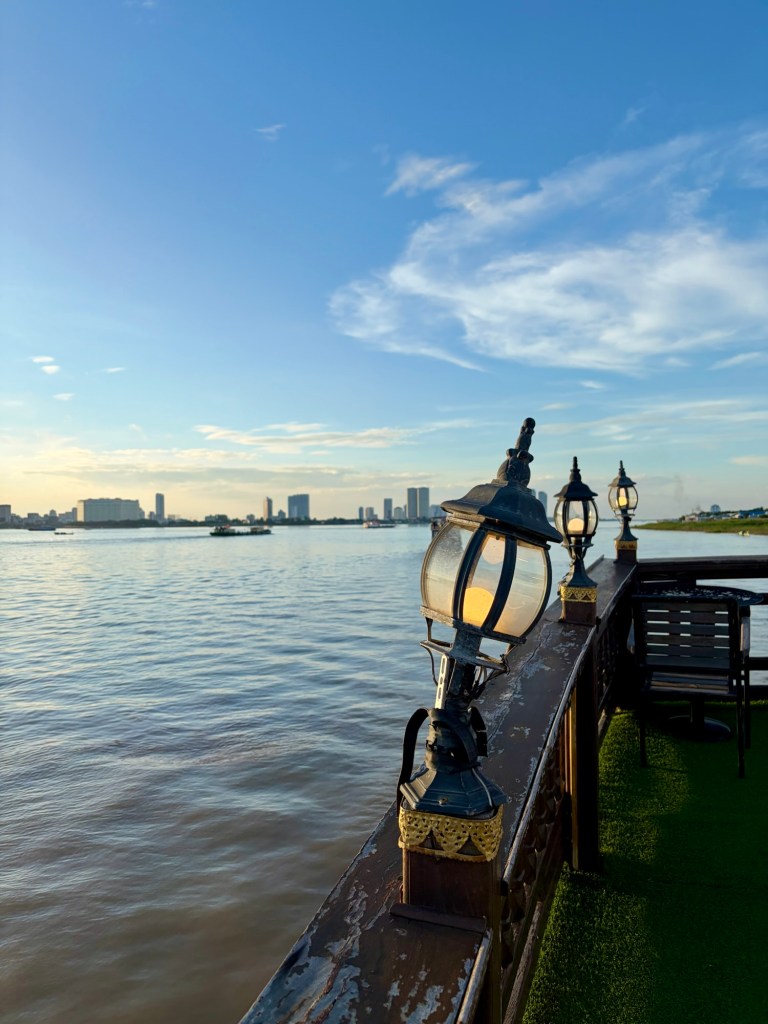
Thankfully, too, there was more to the day that wasn’t nearly so sombre. In the evening we took a sunset river cruise, and spent time talking, drinking and listening to music as we sailed in a large circuit beginning and ending near the royal palace.
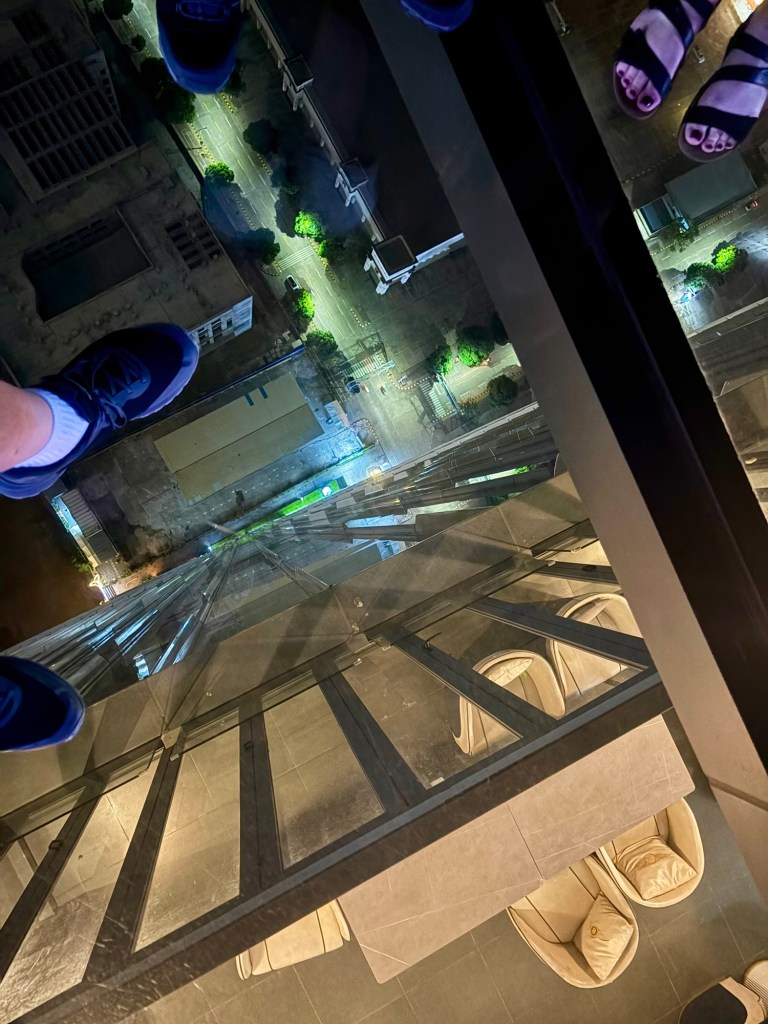
Afterwards, we all made our way to the La Vida Sky Bar, located atop the tallest building in Phnom Penh. Cooler than any lounge I’ve visited in North America, it even has a glass walkway so you can look down at the street 48 floors below. The music was decent, and it was still happy hour, so there were 2-for-1 cocktails on offer.
Once the evening thunderstorms rolled in we piled back into our tuk-tuks and came back to our decidedly less fancy hotel. Tomorrow we have a long drive to Siem Reap.

